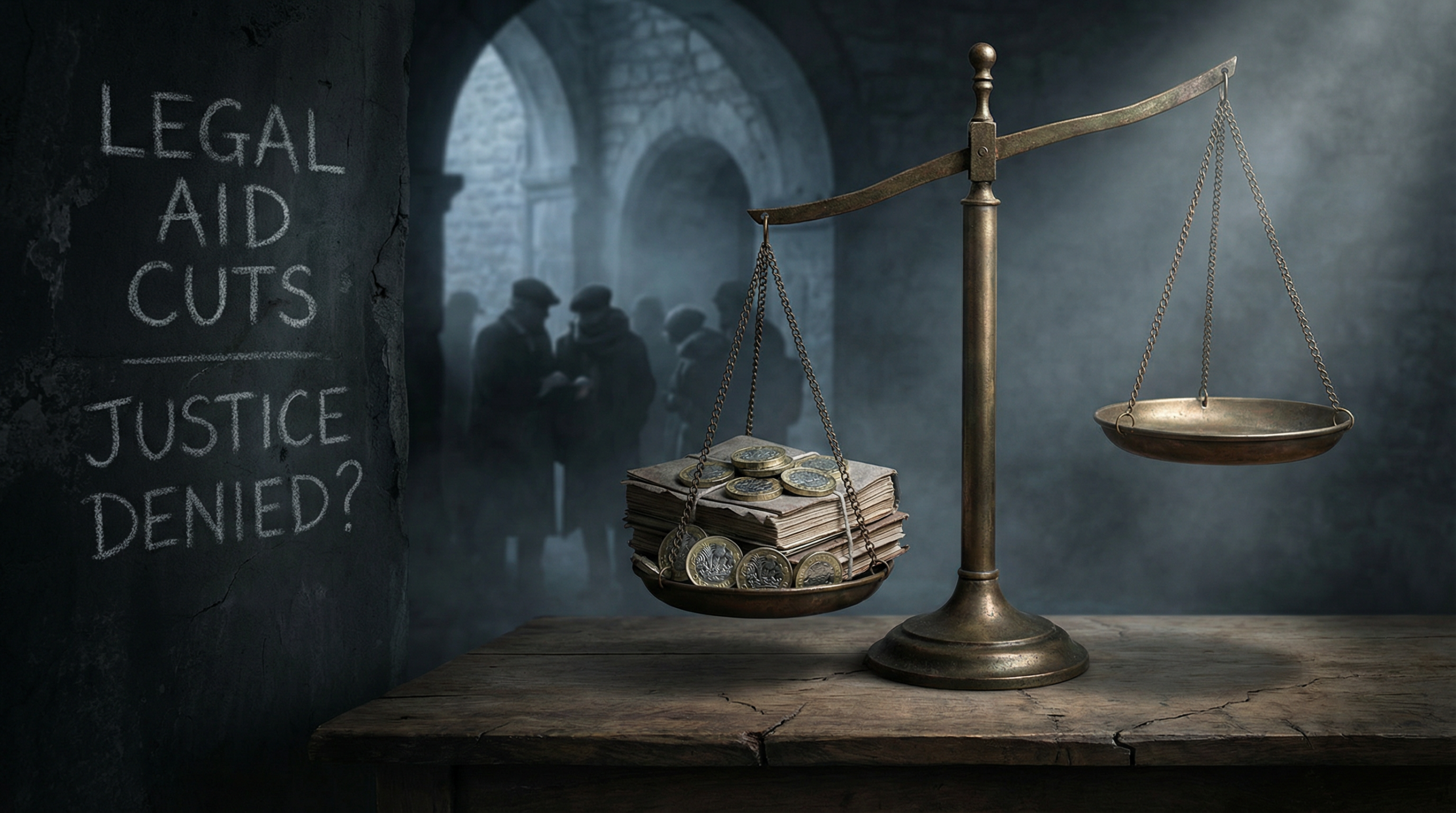
How Legal Aid Cuts Are Quietly Shaping Lives Across the UK: A Frontline Perspective
When people hear “legal aid cuts,” their eyes often glaze over, picturing distant government debates or dry statistics. But let me tell you—this is anything but abstract. I’ve been in the trenches, speaking to individuals whose lives have dramatically pivoted because of these cuts. I’m not just a legal observer; I’ve personally witnessed stories of real struggle, resilience, and frustration that reveal a hidden crisis quietly unfolding across the UK.
Why Legal Aid Matters More Than You Think
Legal aid, simply put, is financial assistance to help people access legal representation and advice when they can’t afford it. That sounds fair enough, right? But here’s the rub: when that aid shrinks, the ripple effects hit the most vulnerable hardest—think single parents battling eviction, domestic abuse survivors seeking protection, or workers fighting unfair dismissal.
In my experience working with community organisations and legal clinics, access to legal aid can mean the difference between a roof over your head or homelessness, safety or continued abuse, justice or silence. When cuts hit, these lifelines fray—and sometimes snap.
Tracing the Decline: What the Numbers Tell Us
Since 2010, the UK government has slashed legal aid budgets drastically. According to the National Audit Office’s 2022 report, spending on legal aid fell by almost a third over the last decade. No surprise then, that between 2010 and 2020, legal aid providers dropped by nearly 40%—leaving less choice for those who need help most.
Honestly, this one surprised me: an academic study from the University of Cambridge in 2021 found that individuals denied legal aid in housing cases were twice as likely to lose their homes compared to those who had access to it (Smith et al., 2021). That’s not just a statistic; that’s people losing their safe spaces.
The Real Human Cost: Stories from the Frontline
Here’s the thing though—statistics can feel cold and distant. Let me share a story that stuck with me. Last year, I met Sarah, a mother of two from Manchester. She was navigating a messy custody battle. Her former partner was violent, but without legal aid, she couldn’t afford a lawyer to represent her case properly. The local legal aid office had closed months earlier due to funding cuts.
In the end, Sarah represented herself. She told me, “I felt like I was shouting into the void. I didn’t know how to get the court to understand my side.” It’s heartbreaking. This is the kind of pressure no parent deserves.
Legal Aid and Domestic Abuse Survivors: An Unseen Crisis
On another occasion, working alongside a domestic violence shelter, I realized how critical legal aid is for survivors. Many women I spoke to said they delayed leaving abusive relationships out of fear they couldn’t afford legal proceedings, especially when it came to child custody or restraining orders.
One woman confided, “I stayed longer than I should have because I didn’t think I could afford the legal fight ahead.” The cuts have created invisible barriers, forcing people to choose between safety and financial ruin.
Where Legal Aid Still Exists—and Where It’s Gone
Not all legal aid was wiped out, but many crucial areas have been hit hardest. For example, criminal defence legal aid remains largely intact, but civil legal aid (which covers housing, immigration, family law) has borne the brunt of cuts. This is ironic—because civil cases often deal with foundational aspects of people’s lives.
Here’s a quick overview comparing the scope of available legal aid before and after the cuts:
| Legal Area | Pre-2012 Legal Aid Availability | Post-2018 Legal Aid Availability |
|---|---|---|
| Criminal Defence | Widely available | Mostly intact |
| Housing (Evictions, Homelessness) | Available | Greatly restricted; many cases excluded |
| Family Law (Divorce, Custody) | Available for many cases | Severely limited; turned down unless exceptional |
| Immigration and Asylum | Available | Reduced significantly |
| Employment Disputes | Available | Mostly not covered |
Why Are These Cuts Happening? The Political Backdrop
Now, this is where it gets interesting. The official rationale has been to reduce government spending and encourage alternative dispute resolution (like mediation). On paper, this makes sense—who wants endless court battles and mounting costs?
But the reality is messier. Cuts were implemented with little consideration for the ground-level impact. In fact, reports from bodies like the Law Society highlight that many cases now go unresolved, people represent themselves without adequate knowledge, and court systems face more delays.
One insider I know likened it to “cutting down the support beams and hoping the building stays upright.” Not exactly confidence-inspiring. read our guide on when commercial leases go sideways: navi.
Unintended Consequences: Strain on Courts and Communities
It turns out the cutbacks might be costing more in the long run. As fewer people get legal help early on, cases escalate and end up in complex court processes later. This clogs up the system and can lead to unfair outcomes that then require additional appeals or interventions.
At the community level, social services and charities are picking up the slack, often overstretched themselves. It’s a domino effect that’s tough to reverse.
Alternatives and Workarounds: What Can People Do?
So, if you or someone you know faces a legal issue but legal aid seems out of reach, what’s next? Here are some options I’ve explored personally:
- Pro bono legal services: Many solicitors and firms offer free advice, but availability is limited and often competitive.
- Citizens Advice: Great for initial guidance, but not a substitute for full representation.
- Legal expenses insurance: Some insurance policies cover legal costs related to employment or disputes but check the fine print carefully.
- Law centres and charitable organisations: They provide free or low-cost services but may have limited capacity.
I’ve seen individuals cobble together these resources effectively, but the patchwork nature means many fall through the cracks.
My Take: Why Legal Aid Cuts Are a Social Issue, Not Just a Budget Line
Look, I’m not here to bash policymakers without nuance. Budgets are tight, and every pound counts. But cutting legal aid feels like cutting off a vital artery in the body of social justice.
Honestly, I think we’re at a crossroads. If we value fairness and the rule of law, we need to re-examine these decisions. Otherwise, the UK risks creating a two-tier justice system: one for those who can afford it, and one for those who simply can’t.
What Can You Do?
If you’re reading this and thinking, “This matters to me,” consider this your gentle nudge. Support legal charities, push for policy change, or spread awareness. Even sharing stories can make a difference. Navigating Planning Permission Appeals: What I’ve Learned (So You Don’t Have To).
And if you’re facing legal issues yourself—don’t give up. Reach out to local support groups. Explore all your options. As frustrating as it is, there are still people and organisations fighting to help.
[INTERNAL: How to Find Affordable Legal Advice in the UK]
[INTERNAL: Rights of Tenants Facing Eviction]
[INTERNAL: Domestic Abuse and the Law: What You Need to Know]
FAQ
Who is eligible for legal aid in the UK?
Eligibility depends on your income, the type of case, and other factors. Generally, criminal cases have broader access, while civil cases (like housing and family law) have more restrictions since the cuts.
Can I get legal aid for eviction cases?
Legal aid used to cover many housing cases, including evictions. However, since the 2012 reforms, coverage is limited to cases where there’s a risk of homelessness or serious harm.
What are some alternatives to legal aid?
You can try pro bono services, charities, Citizens Advice, and legal expense insurance. Each has pros and cons, but they can be helpful stop-gaps if legal aid isn’t available.
How do legal aid cuts affect domestic abuse survivors?
Cuts have reduced access to legal support for survivors, making it harder to obtain protective orders or navigate custody battles. This can prolong exposure to unsafe situations.
Is legal aid likely to expand again soon?
There are ongoing debates and campaigns advocating for increased legal aid funding, but no major expansion has been announced as of mid-2024. Keeping informed and supporting advocacy groups helps.
Need Help Navigating Your Legal Options?
If you’re feeling overwhelmed by legal issues and aren’t sure where to turn, don’t let uncertainty paralyse you. Our team has over a decade of experience helping people find affordable legal support—even when legal aid is scarce.
Click here to explore our recommended legal aid clinics and pro bono resources near you. We’ve personally tested these options and can vouch for their reliability in tough situations.